

18+
-
КАК ПОБЕДИТЬ "ОБОРОТНЕЙ" ВО ВЛАСТИ?
Если вас притесняют рейдеры или в отношении вас сфабриковали дело, вам давно пора ознакомиться с нашим алгоритмом победы!
-

ХОТИТЕ ИМЕТЬ СРЕДСТВО МАССОВОЙ ИНФОРМАЦИИ С ЖУРНАЛИСТАМИ?
Создайте на нашей платформе свой информационный ресурс, который идеально поможет в достижении ваших целей!
HUMAN RIGHTS SITUATION IN THE WORLD 2024/2025: KAZAKHSTAN
2 Мая 2025
SOURCE - KMBPCRK Russian Version
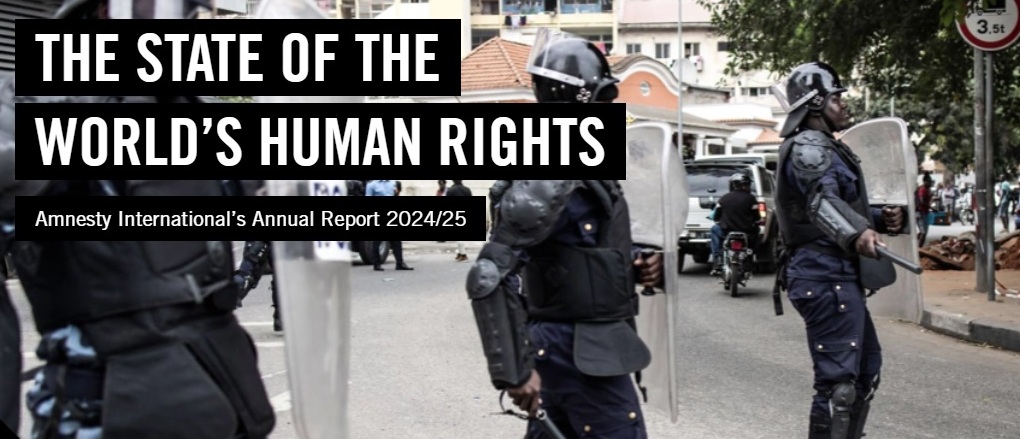
The rights to freedom of expression, peaceful assembly, and association remained unjustifiably restricted. Prosecutions of security personnel for unlawful killings, torture, and other ill-treatment during the January 2022 mass protests continued but often resulted in penalties disproportionate to the severity of the crimes. Police regularly disrupted or prevented peaceful political street protests. Practicing religion outside registered religious organizations remained prohibited. Violence against women and girls remained widespread. Climate policy continued to fall short of addressing reality.
GENERAL SITUATION
President Kassym-Jomart Tokayev's 2022 promise to "reset and renew all key political institutions" by mid-2023 was fulfilled only nominally. Early parliamentary elections in March were marred by numerous allegations of violations in favor of the ruling Amanat party, which won the majority. In November, Kazakhstan hosted Russian President Vladimir Putin on an official visit, yet denied accusations of undermining Western sanctions against Russia, claiming instead to continue regular cooperation. Human rights violations persisted after the January 2022 protests, when at least 219 civilians and 19 law enforcement officers were officially reported killed. Security forces used rubber bullets and firearms unlawfully and indiscriminately against peaceful protesters, rioters, looters, and random passersby.
FREEDOM OF PEACEFUL ASSEMBLY
Legislation and practice regarding peaceful assemblies remained excessively restrictive. Even a solo picket required prior authorization, and participation in or even planning of an "unauthorized" gathering could lead to up to 15 days' detention. The statute of limitations for such "violations" was 12 months, allowing authorities to arrest protesters retroactively to prevent them from participating in new demonstrations. For example, on the eve of the unsanctioned Republic Day rally on October 25, thirteen activists from the unregistered "Alga, Kazakhstan!" party were arrested for participating in previous unauthorized protests. Some protesters faced much harsher punishments. In July, five people who participated in peaceful January 2022 protests were sentenced to up to eight years in prison after unfair trials where defendants reported torture and witness coercion. Peaceful gatherings without fear of fines or arrests were allowed only in specially designated areas (3–4 per city). A feminist march planned for March 8 in Almaty was banned, allegedly because the site had already been reserved by another group. As a result, the march took place in a confined space and the second demonstration did not occur.
EXCESSIVE USE OF FORCE
Only three cases against police or military personnel for unlawful use of firearms during the January 2022 protests reached court throughout the year. One of them involved a contract serviceman who, in November, was acquitted by the Military Court of Almaty Garrison. He was accused of abuse of authority after fatally shooting a four-year-old girl in a car with her siblings.
TORTURE AND OTHER ILL-TREATMENT
Impunity for torture and other ill-treatment remained widespread. Amendments to the Criminal Code in January separated the crime of torture from other forms of ill-treatment and assigned investigations to specialized prosecutors. Most cases related to the January 2022 events were closed due to "lack of evidence." Some were reclassified as abuse of authority or lesser crimes, and others were dropped through plea deals. Of six officially recognized deaths from torture, five cases were referred to court by the end of 2023. Among them, two police officers in Semey received suspended sentences for torture resulting in the death of Zhandos Zhotabayev. A nurse received a one-year suspended sentence for failing in her professional duties. Other cases were marked by serious procedural violations. Only a few victims received compensation from the state Victims’ Compensation Fund — up to €245.
FREEDOM OF EXPRESSION
Throughout the year, human rights defenders recorded 23 politically motivated detentions, including human rights activists, bloggers, and journalists. In July, the Law "On Internet Platforms and Internet Advertising" came into force, imposing fines for the unintentional spread of false information online. In November, following a private complaint, a court fined Radio Azattyk (Radio Free Europe/Radio Liberty) approximately €200 for a publication claiming that the CSTO "is controlled by Russia."
FREEDOM OF ASSOCIATION Ten individuals were sentenced to imprisonment after unfair trials for supporting unregistered peaceful opposition parties and movements allegedly linked to the banned Democratic Choice of Kazakhstan (DVK) movement. On November 30, Marat Zhylanbayev was sentenced to seven years for allegedly financing and supporting "extremist activities." Participation in organizations deemed extremist remained punishable by up to six years in prison. At the end of the year, another five individuals remained under investigation. Registering opposition parties remained virtually impossible, while activities without registration were punishable by prosecution. In April, Zhanbolat Mamai, leader of the unregistered Democratic Party of Kazakhstan, was sentenced to six years of probation and banned from participating in public events, including social media. In September, for the first time, the State Revenue Committee published a list of individuals and organizations receiving foreign funding in the first half of 2023. The list included 240 entities, such as the Kazakhstan International Bureau for Human Rights and the "Adil Soz" foundation. The obligation to disclose foreign funding also applied to remuneration for conducting surveys, providing legal assistance, or disseminating information.
FREEDOM OF RELIGION AND BELIEF
Practicing religion outside of registered religious organizations remained prohibited. Missionary activity was permitted only with state accreditation, which could only be obtained by members of registered organizations. Registration required at least 50 members locally, 500 regionally, and 5,000 nationally. Distributing religious literature without state approval was prohibited. In August, the Ministry of Education confirmed a ban on religious symbols in school uniforms, sparking public debate. According to human rights groups, between September and November, over 2,000 Muslim schoolgirls were withdrawn from school by parents unable to allow them to wear hijabs.
VIOLENCE AGAINST WOMEN AND GIRLS
Violence against women and girls remained widespread. Most, if not all, of the 64 domestic murders registered between January and August involved female victims. First offenses involving "minor physical violence" in the family were punishable only by formal police warnings.
RIGHT TO A HEALTHY ENVIRONMENT
According to the 2023 Climate Change Performance Index, Kazakhstan showed slight improvement compared to other countries, yet its climate policy continued to promote growth rather than reduce emissions. The country ranked among the world's top 30 greenhouse gas polluters. Environmental disasters exacerbated by climate change, including wildfires in the Abai region, claimed the lives of 14 firefighters. Air pollution, mainly from coal burning, led to more than 10,000 premature deaths annually.

Если Вы желаете оказать нашему изданию посильную материальную помощь, нажмите кнопку «Поддержать журнал», которую Вы увидите ниже, пожертвовав сумму, которую Вы посчитаете нужным. Благодарим заранее!
ДЛЯ РАСПРОСТРАНЕНИЯ ПУБЛИКАЦИИ ПО СОЦИАЛЬНЫМ СЕТЯМ, ЖМИТЕ НА ЭТИ ЗНАЧКИ

Д.С. ДАРМОДЕХИН;
А.А. ГАЯМЯН;
Сделать стартовой
Закрыть окно
1. Скопируйте ссылку: http://compronet.info
2. В меню вашего браузера Инструменты (Tools) выберите Настройки (Options)
3. В открытом окне, выберите вкладку Основные (General)
4. Вставьте скопированную ссылку в строку Домашняя страница (Home page)
5. Нажмите ОК