

-
КАК ПОБЕДИТЬ "ОБОРОТНЕЙ" ВО ВЛАСТИ?
Если вас притесняют рейдеры или в отношении вас сфабриковали дело, вам давно пора ознакомиться с нашим алгоритмом победы!
-

ХОТИТЕ ИМЕТЬ СРЕДСТВО МАССОВОЙ ИНФОРМАЦИИ С ЖУРНАЛИСТАМИ?
Создайте на нашей платформе свой информационный ресурс, который идеально поможет в достижении ваших целей!
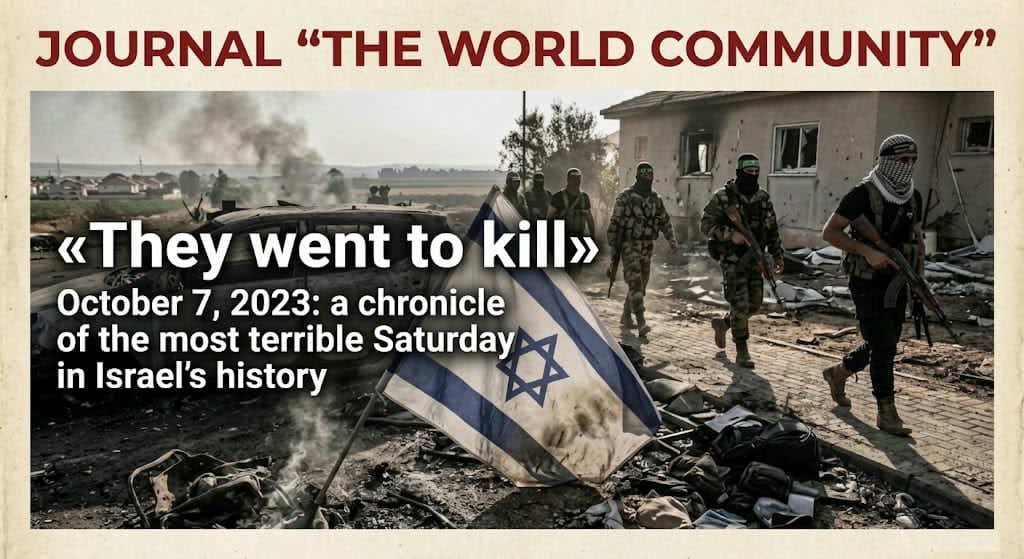
“They Came to Kill”: October 7, 2023 — Chronicle of the Most Terrible Saturday in Israel’s History
6 Октября 2026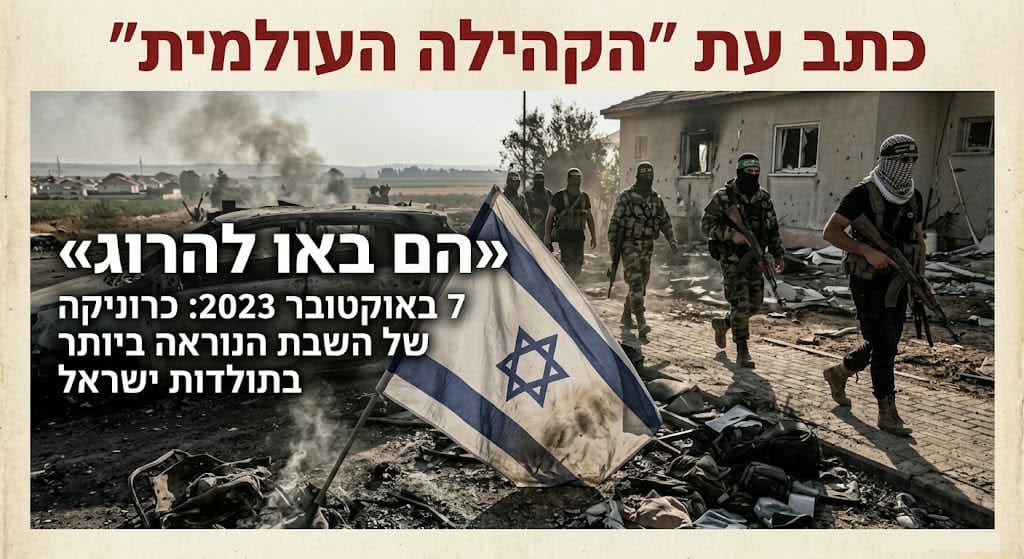
Warning: This text contains descriptions of mass violence.
Editorial note: This material is based on testimonies of survivors, reports from rescue services, IDF data, UN data, and materials from independent investigations. Figures are given as of the time of publication and may be updated. A kibbutz is a small rural community; Nova is a music festival in the Negev desert; ZAKA is a volunteer organization that identifies victims; MDA (Magen David Adom) is the ambulance service.
At 6:29 a.m. on October 7, 2023, sirens tore through the silence of southern Israel. For residents of the border kibbutzim, it was familiar — “Qassam,” “Iron Dome,” a few minutes in the shelter. But that Saturday morning was different. Within minutes after the first salvo, hundreds of armed Hamas militants breached the barrier fence on the border with the Gaza Strip and poured into Israeli towns, kibbutzim, and a music festival.
According to testimonies of survivors, rescue workers’ reports, and assessments by Israeli officials, the attack was accompanied by mass killings of civilians. A number of officials and experts describe it as a massacre. By Israeli estimates, it became the largest single-day loss of Jewish life since the Holocaust.
“THEY SHOT ANYONE WHO CROSSED THEIR PATH”
The Nova electronic music festival, held in the Negev desert near Kibbutz Re’im, was one of the first targets. According to organizers and rescue workers, about 3,500 young people were there, greeting the dawn. Among them were Israelis, foreigners, Arabs, Bedouin — all for whom “friends, love, and endless freedom” were not just words but a way of life.
When the shooting began, the music did not immediately stop. Some took the shots for part of the show. Then rockets appeared in the sky, and on the roads — white pickup trucks with armed men. “I picked up my phone to call and saw the battery was dying. I texted my mother: ‘If I don’t come back, I love you,’” one survivor recalls.
According to survivors’ testimonies and rescue workers’ reports, the militants did not only shoot: they finished off the wounded, set tents on fire, and hunted those who tried to hide in bushes or pits. Testimonies collected by the commission of inquiry include descriptions of sexual violence. Details are presented with restraint so as not to traumatize the reader or diminish the dignity of the dead. One survivor told the commission how a woman was raped and killed before his eyes; another witness described sexual violence committed against him.
According to Israeli authorities, the Nova festival became the site of the largest mass killing that day: 378 people killed, 44 abducted. Among the dead were 344 civilians.
KIBBUTZ BE’ERI: 17 HOURS UNDER MILITANT CONTROL
Kibbutz Be’eri, home to about a thousand people, was one of the main targets. According to IDF estimates, about 70 militants entered its territory at approximately 6:30 a.m. For 17 hours, the kibbutz was under full Hamas control. The militants went from house to house, pulled people out of shelters, and killed entire families.
ZAKA rescue workers, who entered Be’eri only two days later, found the bodies of more than a hundred people. Among them were infants, children, and the elderly. According to rescue workers’ testimonies, some people were shot at point-blank range, some were burned alive. An IDF representative who visited the site said: “Women, infants, and elderly people were brutally killed in accordance with ISIS methods.”
Thirteen-year-old Hadar Bachar from Be’eri saved her father’s life when terrorists burst into their home. While her father fought back, she managed to hide him in a hiding place and distract the militants’ attention toward herself. The girl survived. But hundreds of others did not.
KFAR AZA: FORTY DEAD CHILDREN
In Kibbutz Kfar Aza, rescue workers found the bodies of 200 Israelis. About 40 of them were children, including infants. According to rescue workers’ testimonies, some of the bodies bore signs of beheading. An i24 News reporter who entered the kibbutz after its liberation could not find words: what he saw defied description. Houses burned, walls riddled with bullet holes, children’s cribs overturned, and beside them — shell casings.
According to Israeli data, about 1,200 people were killed in Israel that day. According to UN data, at least 809 of them were civilians, including women, children, and the elderly. Among the dead were citizens of 52 countries. They were not only Jews. They were Muslim Bedouin, Christian Arabs, foreign workers from Thailand, Nepal, and Sri Lanka. According to testimonies, the militants killed everyone.
TESTIMONIES OF SEXUAL VIOLENCE
According to the findings of an independent Israeli investigation published two years later, sexual violence was used “systematically and widely” in order to “cause as much pain and suffering as possible.” The investigation was based on 430 video interviews, 10,000 photographs and videos. The commission, led by Israel Prize laureate Dr. of Law Kochav Elkayam-Levy, relied on direct testimonies of surviving hostages, pathologists’ findings, and evidence from crime scenes.
According to testimonies, women were raped in groups, including in front of relatives, and then killed. Many victims found at the Nova festival and in the kibbutzim had no underwear; forensic examiners recorded injuries to genital organs. One survivor heard terrorists passing a victim “around in a circle” until she stopped breathing.
Hamas has repeatedly denied these accusations. However, the commission’s conclusions are based not on rumors but on testimonies and expert data.
THOSE WHO STOOD IN THE WAY
On the day the state collapsed, ordinary people stood in the terrorists’ path.
Aner Shapira, a 22-year-old musician, found himself in a roadside bomb shelter near Kibbutz Re’im with dozens of people fleeing the festival. The militants began throwing grenades into the shelter. Aner caught them and threw them back. Seven grenades. The eighth exploded in his hand. He died, but saved everyone inside. According to Israeli media reports, after October 7, 289 children were named after him.
Adam, a former special forces soldier from Kibbutz Nir Am, woke to the sound of gunfire at 6:30. He took a pistol, a bulletproof vest, and cigarettes. “I said over the radio: ‘No one will enter Nir Am. No one,’” he recalls. Together with other kibbutz residents — IT workers, farmers, teachers — he held the defense for three to five hours. When the second wave came, he ran out toward the militants from 10 meters and shot them. “They would have burst into the houses and killed women and children. That made us fight,” Adam says.
Dr. Eitan Neeman, a senior physician in pediatric intensive care at Soroka Hospital, went to fight as a volunteer on the first day of the war. Two days later he was killed in battle near the border with Gaza. When the rabbi handling his body opened the dead man’s fist, inside was a live grenade without a pin. Eitan was trying to throw it at the terrorists in the last seconds of his life.
Three soldiers at the Nahal Oz base — Adir Bogale, Dor Lazimi, and Uri Karmi — held off dozens of militants from the elite Nukhba special forces for 40 minutes. They fired until their last bullet, never leaving their position. When empty magazines were found beside their bodies, it became clear: they fought to the end.
Igor Pivnev, a police sergeant, killed 13 terrorists single-handedly. He was called “one of the heroes of October 7.” A year and a half later, he took his own life — the wounds of that Saturday turned out to be deeper than it seemed. His story reminds us: the tragedy of October 7 continues to claim lives even after the fighting ended.
Haim Rubin, an MDA paramedic, pulled dozens of wounded from under fire that day. Seven MDA personnel died saving others. Amit Man, a 22-year-old paramedic, was killed by terrorists while treating the wounded at the Nova festival. She did not abandon them.
“WE COULD NOT BELIEVE THIS WAS HAPPENING IN OUR COUNTRY”
Kibbutz Re’im, where eight members of the rapid response team engaged 80 terrorists, became an example of how civilians stopped what the army could not stop in the first hours. Eight volunteers split into pairs and took positions at four entrances to the kibbutz. They killed 49 militants. Seven residents died, but 43 Nova festival attendees were saved.
In Ein HaBesor, a four-man rapid response team repelled an attack by 16 terrorists. One fighter was wounded but continued shooting. The terrorists retreated.
In Ofakim, police and civilians held the city until the army arrived. In its investigation, the IDF later acknowledged: “The readiness for combat and the courage of police officers, civilians, and soldiers were the main factors that were able to stop the massacre from spreading.”
“WE DID NOT JUST LOSE PEOPLE. WE LOST AN ENTIRE WORLD”
1,200 killed. 251 abducted. Thousands wounded. Hundreds of families destroyed in a single day. But behind these numbers are faces, names, stories that must not be forgotten.
Shayle held her little finger in her newborn’s mouth so he would not cry and give away their hiding place. Nasrin removed the laces from her children’s shoes so they could not run away and be hit by bullets. Mikki demanded that the terrorist keep his promise not to kill his daughter. These stories are documented, verified, confirmed. They are part of a collective memory that will now bleed forever.
October 7, 2023, became the day when many illusions collapsed. The illusion of security, the illusion that a wall could protect, the illusion that “this cannot happen here.” But in that hell there was room for light. Light radiated by those who did not turn away, did not hide, did not give up. Those who threw themselves on grenades. Those who held the shelter door with their bare hands. Those who went out to meet the militants with a single pistol.
They are gone. But children are named after them. Their stories heal wounds. Their feat is the measure of a human life.
Eternal memory to the fallen. Eternal glory to the heroes.
AM YISRAEL CHAI!
Sources: testimonies of survivors, data from the IDF, UN, ZAKA, MDA, materials from the commission led by Kochav Elkayam-Levy, reports from Israeli and international media.
Ruslan Chumakov
Special editor-criminologist
of the magazine “World Community”


Д.С. ДАРМОДЕХИН;
А.А. ГАЯМЯН;
1. Скопируйте ссылку: http://compronet.info
2. В меню вашего браузера Инструменты (Tools) выберите Настройки (Options)
3. В открытом окне, выберите вкладку Основные (General)
4. Вставьте скопированную ссылку в строку Домашняя страница (Home page)
5. Нажмите ОК