

18+
-
КАК ПОБЕДИТЬ "ОБОРОТНЕЙ" ВО ВЛАСТИ?
Если вас притесняют рейдеры или в отношении вас сфабриковали дело, вам давно пора ознакомиться с нашим алгоритмом победы!
-

ХОТИТЕ ИМЕТЬ СРЕДСТВО МАССОВОЙ ИНФОРМАЦИИ С ЖУРНАЛИСТАМИ?
Создайте на нашей платформе свой информационный ресурс, который идеально поможет в достижении ваших целей!
A PARK BENCH, HEADPHONES IN THE COURTROOM, AND FIFTEEN YEARS TO THE TOP: HOW BRITAIN CHOOSES ITS JUDGES
14 Ноября 2026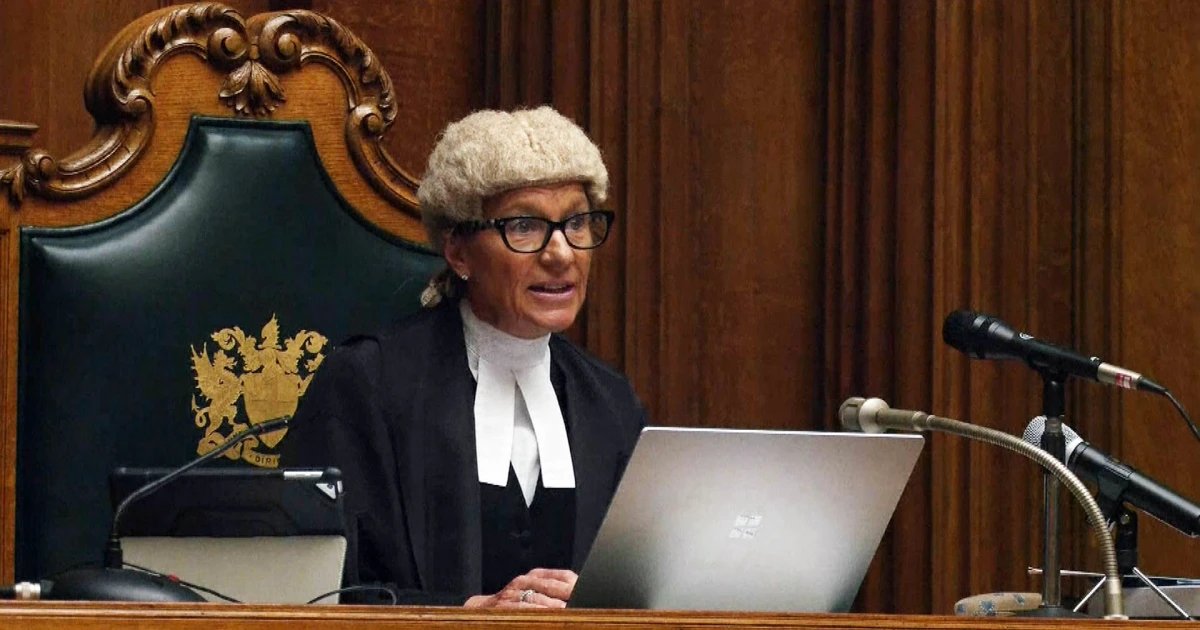
In England and Wales, a person with no law degree can be entrusted with deciding someone else's fate. And that is entirely legal. Beside them sits a professional with seven years of practice. Yet to reach the Supreme Court, a lawyer must live an entire professional life, pass through several layers of scrutiny, and await the monarch's approval. Here are two parallel universes of justice—and the whole engineering of locks and channels between them.
"You don't need to be a lawyer here. You just need to be able to listen and make fair decisions." That is how the invitation reads for those who wish to become magistrates. For those aiming at the Supreme Court, the formula is different: 15 years of practice, a separate commission, and formal approval by the monarch. There is no single "road to the throne" in the British system. There are several routes, each with its own rules.
WORLD ONE: PEOPLE WITHOUT DEGREES
The most striking thing about the judicial system of England and Wales is its "human face." Magistrates (also known as Justices of the Peace) are not professional judges. No legal education is required.
Before applying, a candidate must visit a local court and simply observe proceedings—then write a reflection on what they saw. Next comes an assessment against "five key qualities" (the ability to make balanced decisions, respect for other points of view, communication, and others), a virtual interview, and a DBS check for criminal records.
After appointment come training and a mentor. The formal requirement: serve at least 13 days a year. The age limit is 75. This is a volunteer story: a person gives their time to the community rather than climbing a career ladder in a ministry. By comparison, in the same building there may sit a District Judge—a qualified lawyer with five to seven years of experience after qualification.
WORLD TWO: TRIBUNALS—THE COURTS NO ONE MAKES TV SERIES ABOUT
Between the "volunteer with 13 days a year" and the "Supreme Court justice" lies an intermediate universe rarely mentioned in brochures—tribunals. These are not "second-rate courts" but specialised judicial bodies hearing disputes between citizens and the state, or between private parties: immigration, tax, social benefits, housing, mental health, employment.
The system has two tiers. The First-tier Tribunal hears appeals against decisions by public bodies or disputes between parties. The Upper Tribunal mainly hears appeals on points of law from the First-tier and is, by status, equivalent to the High Court. Each tier is divided into specialised "Chambers": tax, property, social entitlements, and others.
How does this work in practice? Cases are usually heard by a panel: a legally qualified Tribunal Judge as chair, plus non-legal members—specialists in the relevant field. In a disability benefit appeal, the panel may include a doctor and a social worker. Members review the materials in advance; on the day of the hearing, the chair runs the proceedings, the parties present evidence and witnesses, members ask questions, and then the panel withdraws to reach a decision.
Procedure here is less formal than in an ordinary court: many parties appear without lawyers, and tribunal judges themselves help them navigate the process. Yet tribunal decisions are binding on the parties, including fines, compensation, and benefit rulings. Appeals on points of law from the Upper Tribunal may go to the Court of Appeal.
Why does this count as "experience"? The Tribunals, Courts and Enforcement Act 2007 explicitly provides that "the exercise of judicial functions in any court or tribunal" is recognised "legal activity"—regardless of whether it is paid or whether the position is full-time. That means time served in a tribunal counts toward the required PQE for judicial appointment.
In practical terms, tribunals give two things: real judicial experience (chairing, assessing evidence, delivering decisions) and an understanding of the "inquisitorial" style—tribunals take a more active role in proceedings than adversarial courts. Tribunal judges themselves note: helping unrepresented parties and maintaining order in an informal setting is a skill useful in any judicial post. So "tribunal experience" is not an incidental line on a CV but a stage of professional preparation clearly defined by law and recognised in practice.
HOW IT WORKS—AND HOW IT WAS IMPROVED
Until 2005, appointments were largely controlled by politicians: the Lord Chancellor could simply "push through" his own person. The Constitutional Reform Act 2005 changed the rules. The Judicial Appointments Commission (JAC) was created—an independent body. Its task is to select candidates "solely on merit" and to monitor diversity.
This is not a magic button. The process takes months.
For most roles involving lawyers, the rule of post-qualification experience (PQE) applies: 5, 7, or more years of work after qualification. What matters is not only quantity but the nature of the experience. There are often "steps": first a deputy role (part-time, sometimes fee-paid), then a full salaried position. There is also a strict rule: after moving to a full-time salaried judicial post, one generally cannot return to private practice.
AN APPROXIMATE TRAJECTORY (FOR ENGLAND AND WALES):
Deputy District Judge → District Judge → Recorder → Circuit Judge → High Court Judge → Court of Appeal → Supreme Court.
For the Supreme Court the criterion is strict: either 15 years of legal practice or a combination of "high judicial office + 2 years." Someone who earned a degree at 22 and became a solicitor at 25 can reach this level only around the age of 40–45. This is not a career—it is a test of maturity.
"NAME HIDDEN": HOW SELECTION WORKS
At the first stage, the candidate fills out an online form and assembles evidence: what cases they handled, how they resolved conflicts, how they responded to pressure. Then comes the name-blind sift: the commission selects candidates without seeing names or personal data. The aim is to reduce the influence of unconscious bias.
For certain roles there are written exercises: present a hypothetical case, identify the issues, apply the rule of law. There is no "pass mark" in the usual sense. There is only ranking.
On the final day (selection day) come interviews and role-play scenarios ("you are the judge, before you is a party who is shouting"), assessing how a person keeps their composure. Then follow good-character checks: not only criminal records but financial issues, disciplinary sanctions, civil claims.
The chain looks almost theatrical: panel → JAC (commissioners may accept or challenge the recommendation) → Lord Chancellor (may ask for reconsideration, may reject, but cannot name another person) → Prime Minister → monarch (formal approval). The point is that the politician here is a final checkpoint rather than the main character.
There are also "preparatory" routes: the Judicial Work Shadowing Scheme, the Judicial Mentoring Scheme. Experience in tribunals is also useful. If rejected, one can apply again and request feedback.
WHAT THE BROCHURES DON'T MENTION
The system tries to address the problem of "closedness." The JAC supports candidates from underrepresented groups: women, ethnic minorities, people with disabilities. And still the debates continue. Critics point out that most senior judges still come from elite universities and from the barrister profession. There are also nuances with fee-paid roles: they offer flexibility but can create a two-tier system.
And then there is Scotland and Northern Ireland. They have their own commissions (the Judicial Appointments Board for Scotland and others), and the details differ. One cannot take the formula for England and Wales and apply it to the whole of the United Kingdom.
CONCLUSION
The British model is not about "talent and luck" but about time and transparency. Here one cannot become a judge straight out of university. First you must live the life of a lawyer, prove you can make decisions in difficult situations, pass through several layers of scrutiny, and await formal approval.
It is slow. It is competitive. And, by the design of the 2005 reformers, it is far safer for democracy than "hand-picked" appointments.
And which step would seem hardest to you? The volunteer one ("13 days a year"), the tribunal one, or the one involving 15 years and the Supreme Court?
Dmitry DARMODEKHIN
Director of the Interstate Agency
for Special Investigations and Anti-Corruption,
Editor-in-Chief of the journal "World Community,"
Vice-Rector of the University
of Natural and Humanitarian Sciences (Moscow)
for Special Investigations and Anti-Corruption,
Editor-in-Chief of the journal "World Community,"
Vice-Rector of the University
of Natural and Humanitarian Sciences (Moscow)

Если Вы желаете оказать нашему изданию посильную материальную помощь, нажмите кнопку «Поддержать журнал», которую Вы увидите ниже, пожертвовав сумму, которую Вы посчитаете нужным. Благодарим заранее!
ДЛЯ РАСПРОСТРАНЕНИЯ ПУБЛИКАЦИИ ПО СОЦИАЛЬНЫМ СЕТЯМ, ЖМИТЕ НА ЭТИ ЗНАЧКИ

Д.С. ДАРМОДЕХИН;
А.А. ГАЯМЯН;
Сделать стартовой
Закрыть окно
1. Скопируйте ссылку: http://compronet.info
2. В меню вашего браузера Инструменты (Tools) выберите Настройки (Options)
3. В открытом окне, выберите вкладку Основные (General)
4. Вставьте скопированную ссылку в строку Домашняя страница (Home page)
5. Нажмите ОК