

-
КАК ПОБЕДИТЬ "ОБОРОТНЕЙ" ВО ВЛАСТИ?
Если вас притесняют рейдеры или в отношении вас сфабриковали дело, вам давно пора ознакомиться с нашим алгоритмом победы!
-

ХОТИТЕ ИМЕТЬ СРЕДСТВО МАССОВОЙ ИНФОРМАЦИИ С ЖУРНАЛИСТАМИ?
Создайте на нашей платформе свой информационный ресурс, который идеально поможет в достижении ваших целей!
63 YEARS AFTER DALLAS: WHAT THE «KENNEDY FILES» SHOW
18 Ноября 2026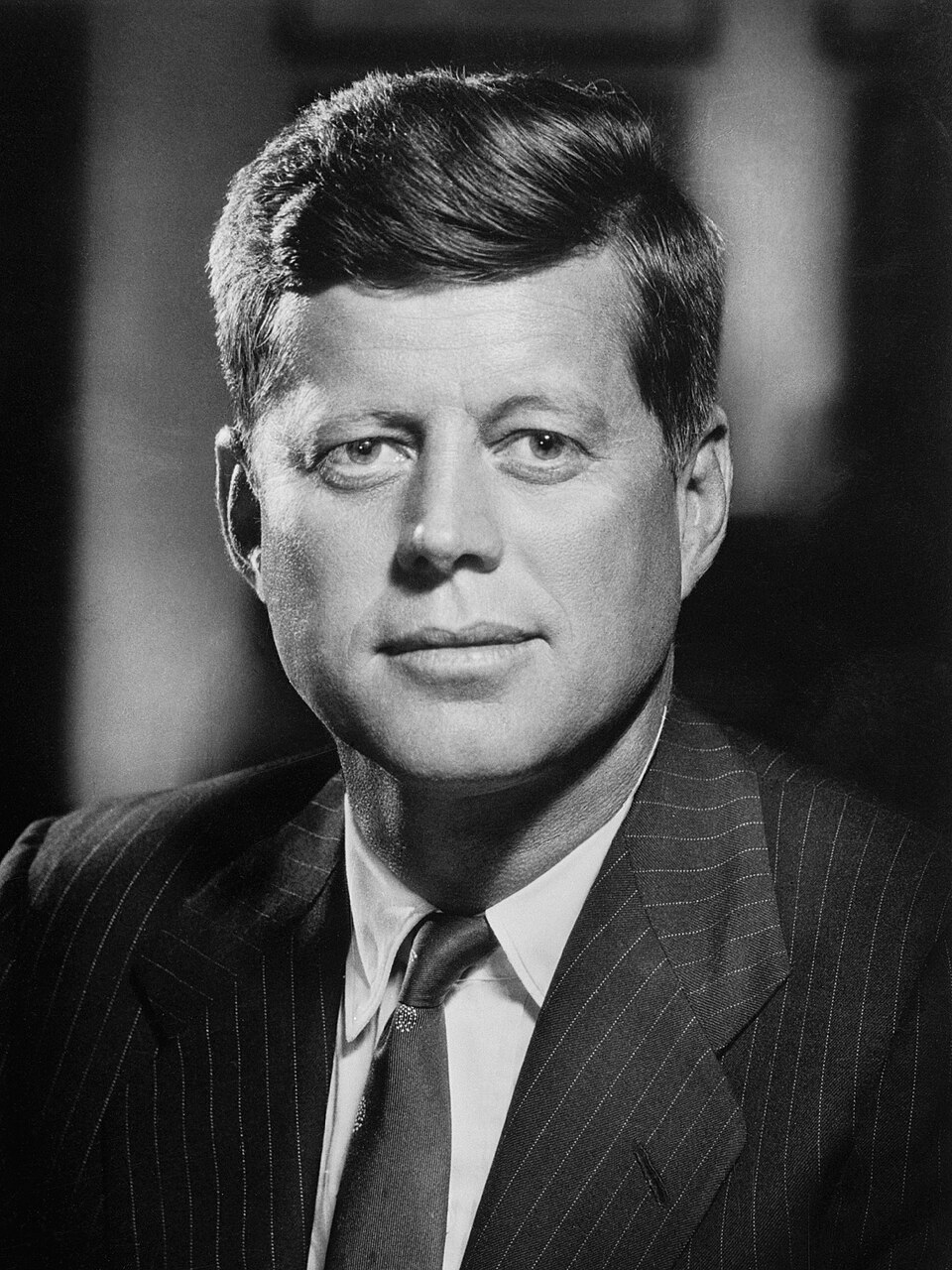
Источник картинки (не коммерческое использование)
November 22, 1963. A motorcade in Dallas. November 22, 2026. Between those two dates: 63 years, one official version, and tens of thousands of pages once marked «Secret». Now the president has ordered everything revealed.
THE DAY THAT CAN'T BE FORGOTTEN
It was a Tuesday. The motorcade moved along Main Street in the Dealey Plaza area. The third bullet — according to the investigation — hit John F. Kennedy in the back of the head and proved fatal. There was also the so-called «magic bullet»: the theory that a single bullet had passed through the president’s neck, then through the shoulder and chest of Texas Governor John Connally.
The suspect was Lee Harvey Oswald, a former Marine who had spent time in the USSR. He was arrested. And on November 24, 1963 — just two days later — Oswald was shot by Jack Ruby, right in the hallway of a police station, almost on live television. The man who was supposed to stand trial was dead. That was the first huge crack in the picture.
THE WARREN COMMISSION AND THE «LONE GUNMAN»
President Lyndon B. Johnson established the Warren Commission, headed by Earl Warren (Chief Justice of the Supreme Court). The foundation was an FBI report — more than 25,000 pages. In September 1964 the final document was published (888 pages): Oswald had acted alone; there was no conspiracy.
But the witnesses disagreed. Some heard three shots; others heard four. The Grassy Knoll contradicted the «lone gunman» trajectory. There were photographs, the Zapruder film, audio recordings. The official reports did not close every gap.
Later other forums appeared. The Rockefeller Commission (1975) checked for CIA involvement and found no evidence. The House Select Committee (HSCA, 1976–1979) went further: a motorcycle audio track in the motorcade captured a «fourth shot» that Oswald could not have produced. The committee acknowledged that there might have been two shooters — but named no specific suspects.
Separately, there was Jim Garrison, district attorney of New Orleans. From 1966 he built a conspiracy case, brought Clay Shaw to trial, and lost: the jury acquitted. This story became the basis for Oliver Stone’s film *JFK* (1992), after which the topic exploded in pop culture again.
THE LAW, THE DELAYS, THE DECLASSIFICATION
In 1992 Congress passed a law: all materials must be declassified after 25 years (by 2017). But the president may override this for «national security».
- 2017: Donald Trump ordered the release of portions of the archives.
- 2021–2023: Joe Biden released further batches (including more than 13,000 documents), leaving redactions.
- March 2025: Trump signed an order. The National Archives released about 80,000 pages — unredacted. «People have been waiting for this for decades», the president said. Director of National Intelligence Tulsi Gabbard called it «a new era of maximum transparency».
Initial assessments were restrained. This was not about «new bombshells» but about reading whole documents instead of versions with blacked-out sections. Themes included surveillance of Oswald in Mexico City («Mexico City»), Kennedy’s distrust of the CIA, and operations involving Oswald. The archives did not confirm that Moscow was the assassin: Soviet agencies merely observed a young man. There were other details — for example, stories of people who accused the CIA of orchestrating the murder and who later died («by official account, by suicide»).
The picture is still incomplete. The FBI noted new findings (thousands of pages); some records (including IRS documents) remain sealed. This is not a «closed case», but a process that has stretched across decades.
WHY WE STILL ARGUE
There are two layers.
The first is factual. Contradictory testimony, «magic bullets», the death of the central figure before trial, redacted pages. When a state withholds information, space opens for alternative versions.
The second is cultural. The Kennedy assassination is not merely a crime. It is the moment when an «official version» first collided with a powerful visual culture (the Zapruder film, Stone’s movie, later podcasts and social media). For many, it is a symbol: the state does not always tell the truth. There are broader parallels (Robert Kennedy, Martin Luther King Jr. — the same mechanisms, the same «unfinished business»).
Polls show that a significant portion of Americans still do not believe in the «lone gunman» theory. And here is the crucial difference: «no evidence of a conspiracy» is a fact. «There was definitely no conspiracy» is still an interpretation.
CONCLUSION
November 22 is not a period. It is a starting line. We have received thousands of pages without red stripes — but we have not received a final chapter. Perhaps the value of these releases lies not in «solving» the case, but in the fact that society is looking at the archives again and deciding: what do we believe?
For verification: the collection is maintained by the U.S. National Archives (the President John F. Kennedy Assassination Records Collection).
Dmitry Darmodekhin,
Director of the Interstate Agency
for Special Investigations
and Anti-Corruption,
Chief Criminalist Editor
of "World Community" magazine,
Vice-Rector of the University
of Natural and Humanitarian Sciences
(Moscow)


Д.С. ДАРМОДЕХИН;
А.А. ГАЯМЯН;
1. Скопируйте ссылку: http://compronet.info
2. В меню вашего браузера Инструменты (Tools) выберите Настройки (Options)
3. В открытом окне, выберите вкладку Основные (General)
4. Вставьте скопированную ссылку в строку Домашняя страница (Home page)
5. Нажмите ОК