

-

КАК ПОБЕДИТЬ "ОБОРОТНЕЙ" ВО ВЛАСТИ?
Если вас притесняют рейдеры или в отношении вас сфабриковали дело, вам давно пора ознакомиться с нашим алгоритмом победы!
-

ХОТИТЕ ИМЕТЬ СРЕДСТВО МАССОВОЙ ИНФОРМАЦИИ С ЖУРНАЛИСТАМИ?
Создайте на нашей платформе свой информационный ресурс, который идеально поможет в достижении ваших целей!
FROM THE «GOD-IDEA» TO INCLUSIVE COMMUNITIES: THE MAKING OF PROGRESSIVE JUDAISM
19 Ноября 2026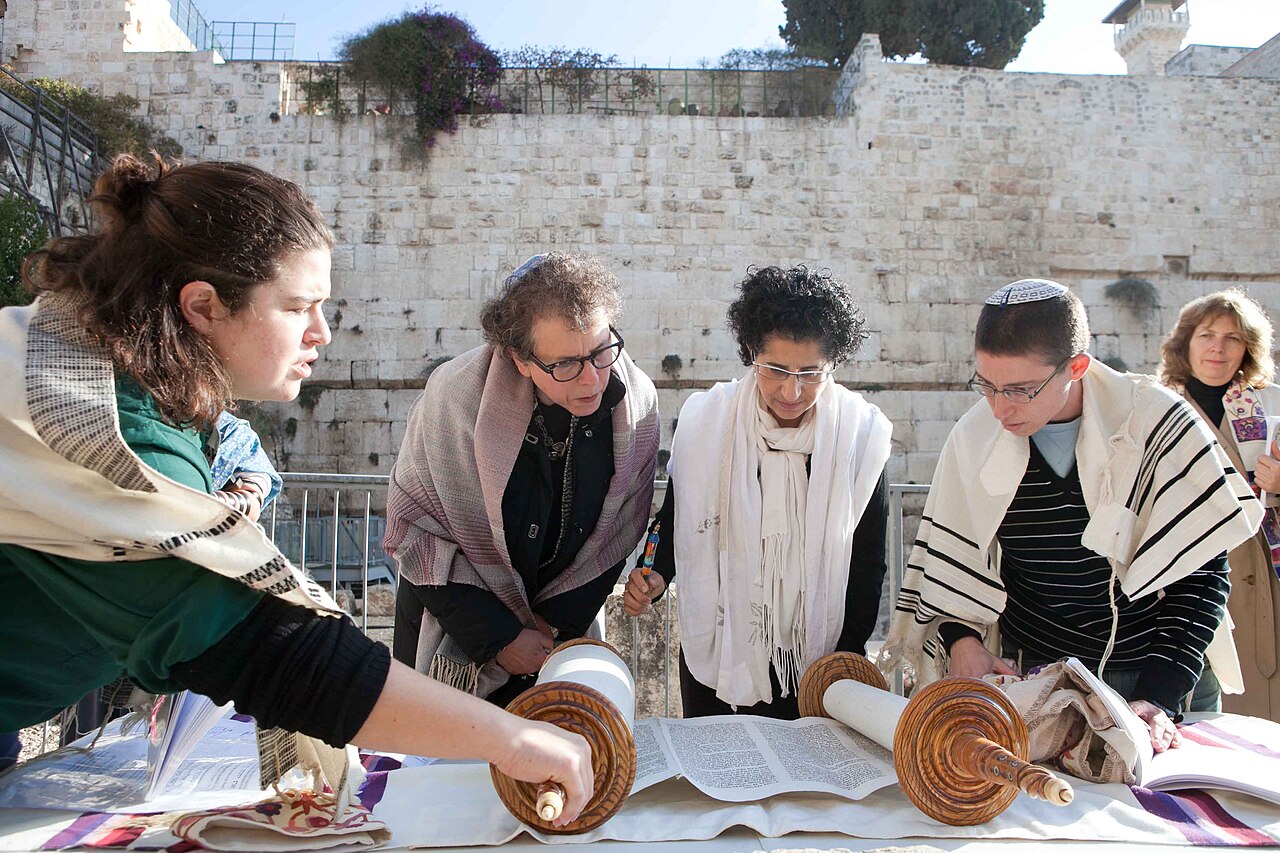
Источник картинки (не коммерческое использование)
When people say «progressive Judaism», they usually mean «Reform Judaism». Other labels appear too — «liberal», «modern». This is not a «softer version» of traditional Judaism, but a project: how to reconcile an ancient tradition with life in a modern society. It is a history of constant compromise — from the radical rejection of rituals to a deliberate return to some of them.
THE AGE OF EMANCIPATION. GERMANY, 1820S–1840S
The movement took shape on the waves of the Jewish Enlightenment (Haskalah) and the processes of emancipation. As early as 1810, the secular activist Israel Jacobson held a new-style service in Seesen, with women and children present. One of its main theologians was Rabbi Abraham Geiger. He formulated the concept of «continuous, progressive revelation»: the Torah is not a frozen divine text, but the result of human reflection across different eras. The core of Judaism is monotheism and ethics.
There were also very radical figures. Rabbi Samuel Holdheim proposed replacing halakhic norms on marriage and divorce with «laws of the state.» The goal was simple: to make a Jew a full citizen of modern European society, and for that many ritual rules had to be «freed.»
CROSSING THE OCEAN AND «CLASSICAL» REFORM
A wave of emigration carried the idea across the Atlantic. The first American Reform congregation appeared in 1841 in Charleston, South Carolina (the Reformed Society of Israelites; the permanent congregation Beth Elohim followed shortly). The key figure was Isaac Mayer Wise: he built not just congregations, but a system — the Union of American Hebrew Congregations (renamed the Union for Reform Judaism in 2003), the Hebrew Union College (1875) for training rabbis, and new prayer books in English.
The culmination was the Pittsburgh Platform of 1885 (drafted by Kaufmann Kohler). The language was stark: only moral laws were recognized; most rituals (kosher, laws of ritual purity, etc.) were declared «external.» Among the experiments was the suggestion to observe the «Sabbath on Sunday» (Sunday Sabbath) — because of the six-day workweek, this seemed more practical. For many traditional Jews, this looked like abandoning the very core of Judaism.
SOFTENING: FROM REJECTION TO «TRADITION AND CHANGE»
Over time, the radicalism became a problem. In 1937, the Columbus Platform corrected the course: it acknowledged the value of Jewish peoplehood and, later, supported Zionism (especially after the establishment of the State of Israel). Reform congregations began to treat Hebrew, Shabbat, and symbolism more carefully.
There is another branch to mention. In reaction to the radicalism of the Reform movement, Conservative Judaism emerged (one of its key figures being Solomon Schechter). It was not a «return to the past», but a formula — «tradition and change.» Today this is often the middle ground. There are also the Reconstructionists, for whom the focus shifts from religion to Jewish culture.
After the Holocaust the movement re-examined itself: the preservation of identity came to the fore. In 1999 the Central Conference of American Rabbis adopted a new «Pittsburgh Statement of Principles.» It spoke of the «reality and unity of God», the sanctity of the people of Israel, and tikkun olam («repairing the world») as a central value. The result is a kind of circle: from «this is all unnecessary» to «we choose what matters to us.»
---
WOMEN AND NEW COMMUNITY FORMATS
The second half of the 20th century was the era of expansion. Regina Jonas became the first woman in history to be ordained as a rabbi (1935, Berlin; she was murdered in Auschwitz in 1944). In 1972, Sally Priesand became the first woman rabbi in the American Reform movement. Then came the inclusion of women in the minyan, new formats for family life. Progressive Judaism linked religious freedom with modern social movements: civil rights, ecology, aid to the poor.
The World Union for Progressive Judaism (WUPJ) was founded in London in 1926; its headquarters moved to Jerusalem in 1973. Terminology varies: in the US this is Reform Judaism, in the UK it is Liberal Judaism, while «progressive Judaism» is often the international label. The Conservative movement is a separate denomination and should not be conflated with the Reform movement.
IN RUSSIA
Similar groups appeared in the late 1980s. In 1995 the Russian Union of Progressive Judaism Associations (RSPU) was created; it later became the Association of Religious Organizations of Modern Judaism in Russia (OROSIR; until 1998 it was also known as the «Movement for Progressive Judaism»). The scale here is very different from that of major Orthodox structures (FEOR, etc.), and the legal status of individual local congregations should always be checked separately. Tension is common: for many traditional communities, such ceremonies are not «another road» but a threat. Internal conflicts also occur — for example, chairpersons resigning over theological disagreements with colleagues.
---
BOTTOM LINE
This is not a static «liberal religion»; it is a living process. The main formula of progressive Judaism is this: Judaism keeps evolving. The real question is where to draw the line — between «modernity» and «betrayal of the tradition», between freedom and the preservation of what is truly precious.
Boris BERLAZER


Д.С. ДАРМОДЕХИН;
А.А. ГАЯМЯН;
1. Скопируйте ссылку: http://compronet.info
2. В меню вашего браузера Инструменты (Tools) выберите Настройки (Options)
3. В открытом окне, выберите вкладку Основные (General)
4. Вставьте скопированную ссылку в строку Домашняя страница (Home page)
5. Нажмите ОК