

-
КАК ПОБЕДИТЬ "ОБОРОТНЕЙ" ВО ВЛАСТИ?
Если вас притесняют рейдеры или в отношении вас сфабриковали дело, вам давно пора ознакомиться с нашим алгоритмом победы!
-

ХОТИТЕ ИМЕТЬ СРЕДСТВО МАССОВОЙ ИНФОРМАЦИИ С ЖУРНАЛИСТАМИ?
Создайте на нашей платформе свой информационный ресурс, который идеально поможет в достижении ваших целей!
"The Bobby Without a Gun": How the World's Oldest Police Force Is Going Through Its Toughest Year
27 Ноября 2026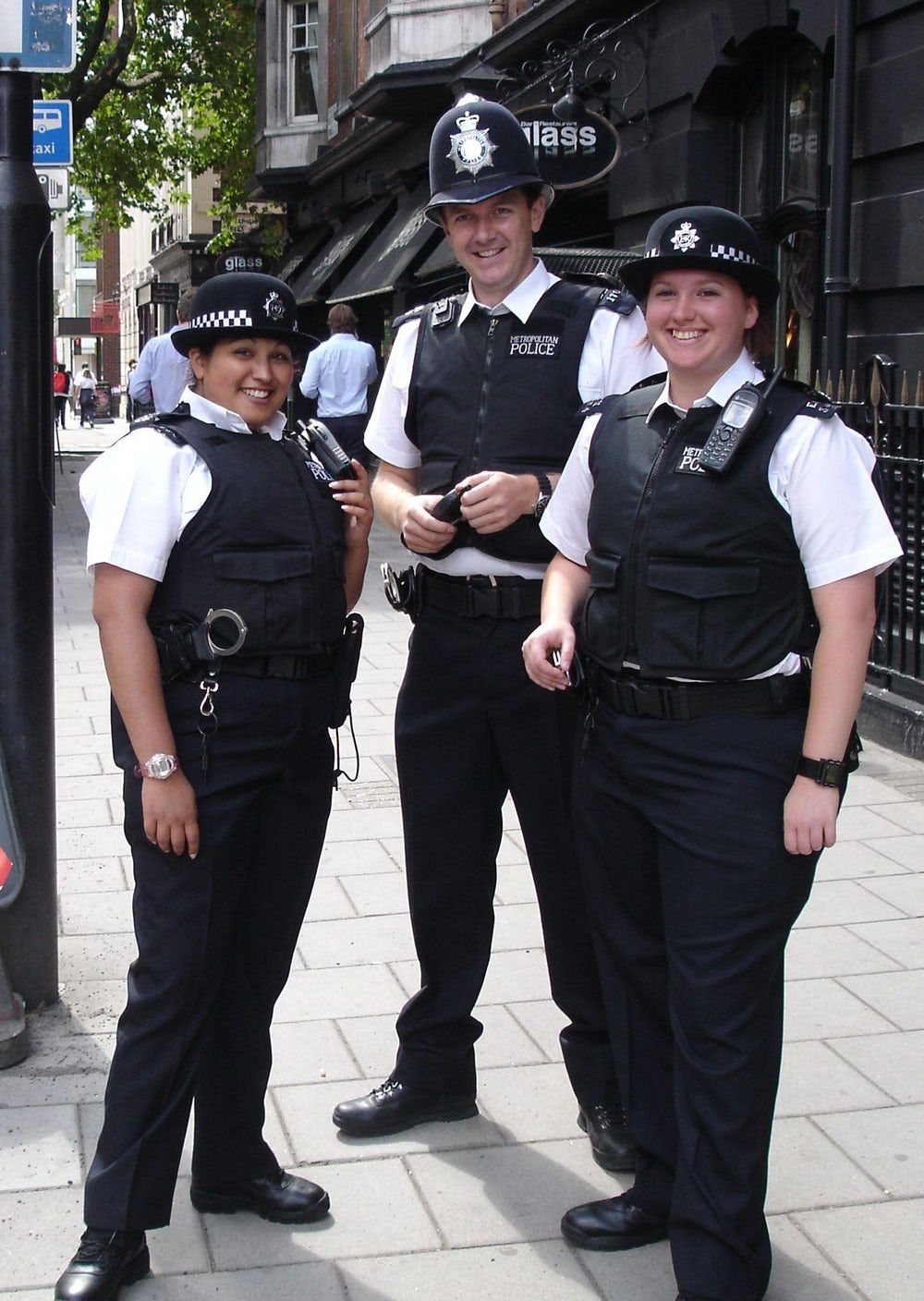
Источник картинки (не коммерческое использование)
For two centuries, British police officers have gone unarmed, answered to the name "bobby," and starred in countless detective novels. In 2026, this model is facing several trials at once: the biggest reform in half a century, an unprecedented purge of the ranks — and even a revolt by Freemasons within the force itself.
The Police That Robert Peel Built
Until the nineteenth century, Britain had no police in the modern sense: order in the provinces was maintained by feudal lords and parish constables, who received no pay for their work — but could break down a suspect's door and lock him in the stocks. Everything changed in 1829, when the future Prime Minister Robert Peel founded the Metropolitan Police. To this day, officers are called "bobbies" after his diminutive.
Peel's central idea was the principle of "policing by consent." A police officer was to be not a soldier but a civilian in a blue uniform (not army red!), whose authority flows from the public's trust rather than from fear. From this principle grew the famous peculiarity: the British patrol officer walks the street without a pistol. Firearms are carried by only four to five per cent of officers in England and Wales — specialized armed units who keep their weapons in patrol cars and guard airports and embassies. Everyone else carries a wooden baton (not rubber!), a pepper spray and a Taser. Even after the IRA attacks and the 2012 tragedy in Manchester, where two unarmed officers were killed by a grenade, the force preserved its tradition. "Carrying a gun does not at all mean you won't be shot at," the Manchester chief replied at the time.
British bobbies are also famous for small acts of mercy: many patrol cars carry soft toys, to distract a child caught up in a road accident. Writing as someone who has spent a career on investigations and anti-corruption work, I would stress: this model is no romantic whim, but a deliberate system in which public trust works more effectively than fear. That is precisely why what is happening to it today deserves attention far beyond Britain.
2026: The Year of the Great Upheaval
Had anyone suggested a year ago that the police of Foggy Albion would declare war on… Freemasons, it would have sounded like an Agatha Christie plot. Yet that is exactly what happened: Freemasons serving in the Metropolitan Police have filed a claim in the High Court against their own commissioner, Sir Mark Rowley. At issue is a new rule requiring officers to declare membership in any "hierarchical organization demanding mutual support." The United Grand Lodge calls it "religious discrimination"; the police call it restoring integrity — a shadow cast over the force by the still-unsolved murder of 1987, in whose investigation eleven Freemason officers took part.
Meanwhile, a drama no less sweeping is unfolding inside the Metropolitan Police. Over four years, some 1,800 officers have left the London force after failing vetting, becoming subject to misconduct proceedings or resigning under investigation — and this, in the words of Deputy Commissioner Matt Jukes, is not a theory of "a few rotten apples": the problems of culture run far deeper. The proportion of recruits failing enhanced vetting has doubled to more than ten per cent, while internal reports of abuse have nearly tripled, reaching 1,348 in a single year. Technology has joined the effort: using analytical systems, the force is combing through "tens of thousands" of service phones in search of wrongdoers.
In parallel, Scotland Yard has opened a criminal investigation into alleged irregularities in the funding of the Reform UK party, following a Channel 4 inquiry into foreign donations.
The Biggest Reform Since the 1970s
The principal news, however, is structural. In January 2026, the Home Office published a white paper with a telling title — From Local to National. It proposes merging part of the 43 police forces of England and Wales into larger regional forces and creating a single National Police Service, uniting the National Crime Agency, the College of Policing and the National Police Chiefs' Council. The resulting changes could amount to the biggest shake-up of British policing in half a century — since the old patchwork system was consolidated into 43 forces. At the same time, police and crime commissioners are to be abolished, and the Home Secretary gains the power to dismiss a chief constable.
The plans have sparked a furious debate: Conservatives warn that "regional mega-forces will make everything worse, not better." There is ground for scepticism: despite a falling overall crime rate, only about six per cent of recorded offences are now solved, against fifteen per cent a decade ago.
What the Numbers Say
According to the Office for National Statistics for the year to June 2026: crime as measured by population surveys stands at roughly 9.7 million offences (no significant change), homicides number 512 (down one per cent), knife-enabled offences 48,615 (down six per cent), and shoplifting 519,516 (down two per cent). London's police still record twenty-eight per cent of all knife crime in the country — but even there the trend is improving: down twelve per cent over the year.
Why the Whole World Is Watching
The British police are not merely an institution but the visual code of an entire nation: the helmet, the mounted patrols, the bobby, the laughing tourists. Above all, though, this is the world's cleanest experiment on the idea that order can be maintained without a gun on the belt. The experiment has held for two centuries. It is now in its tensest season in decades — and the finale of this series is worth marking in the calendar.
Dmitry DARMODEKHIN,
Director of the Interstate Agency
for Special Investigations and Anti-Corruption,
Editor-in-Chief of the journal "World Community",
Vice-Rector of the University of
Natural Sciences and Humanities (Moscow)


Д.С. ДАРМОДЕХИН;
А.А. ГАЯМЯН;
1. Скопируйте ссылку: http://compronet.info
2. В меню вашего браузера Инструменты (Tools) выберите Настройки (Options)
3. В открытом окне, выберите вкладку Основные (General)
4. Вставьте скопированную ссылку в строку Домашняя страница (Home page)
5. Нажмите ОК